Questa è una notizia a pagamento

E infatti per leggerla stai pagando con moneta preziosa: mi stai dando attenzione. Ti ringrazio, ma non è questo che volevo dirti.

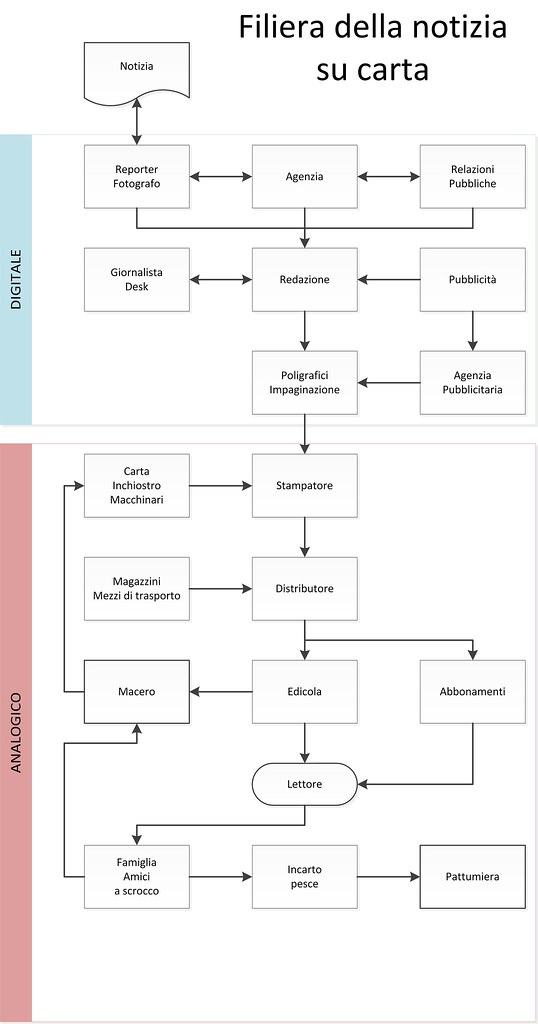
Nel magico mondo delle notizie su carta, la discussione sui pagamenti è fondamentalmente questa:

“Ho una cosa da venderti, quindi bisogna che trovi il modo di farmi pagare”.

Ovviamente, non porterà da nessuna parte fino a quando non diventerà questa:

“Ho una cosa che ti interessa, se mi paghi te la dico”.

Five Key Reasons Why Newspapers Are Failing

Mario Tedeschini Lalli segnala, e io mi affretto a rilanciare, Five Key Reasons why Newspapers Are Falling di Bill Wyman.

Wyman è impietoso al limite della brutalità nel suo riassunto di tutte le cose che non funzionano nella carta stampata, ma alla fine offre anche suggerimenti interessanti.

Quote of note:

“So: We have an industry facing a crisis that demands sophisticated, daring action, but that has rewarded, ineluctably but surely, timidity and caution, and whose livelihood has depended on not telling its audience anything it didn’t want to hear. Now, that industry, its underlying business model vaporizing, has migrated itself to the web.

The web doesn’t reward blandness. It doesn’t really like the obvious, the inoffensive and the established. Today, if you published a web page with the headlines I just listed on it—you know, starting with “Wooden Memories” and going right on down to “Great Gifts for Teachers”—you wouldn’t get many readers. In this way, the web mercilessly exposes the flaccidness of the content of most papers. It creates a straightjacket for them: As they desperately bland themselves out on land, the material they have on hand to impress in cyberspace is correspondingly pallid.

Paradoxically, it also displays their superficiality: Anyone truly interested in old wood-shop projects can find a world of much better information about them on the web. A daily newspaper presents a platter to readers. You don’t have to eat everything on it, but you’re not getting anything that wasn’t sent out from the kitchen originally. And over the years editors have learned not to put anything spicy on that platter.”

Ma Luca de Biase sarà sostenibile?

Segnalo un gran bel post di Luca de Biase sul giornalismo sostenibile, che mi conferma una idea che ho da tempo: il giornalismo, come lo definisce lui, non è mai stato messo in pericolo da internet, anzi risorge e trova nuova linfa dalla liberazione dal giogo della carta e della TV.

Dice Luca:

…ciò che è davvero il giornalismo: un lavoro artigiano, fondamentalmente di ricerca, dotato di un metodo di lavoro orientato alla raccolta e alla verifica dei fatti, con una linea interpretativa esplicita

Sono ottimista: morirà l’ordine dei giornalisti, moriranno gli editori, moriranno giornali televisioni e pubblicità, ma credo che questo lavoro artigiano non morirà mai.

Te la faccio vedere io la rettifica: effetti collaterali

Giusto per segnalare l’ottimo post di Luca Alagna che prova a ipotizzare scenari possibili in caso di approvazione della legge, dimostrando che non serve a niente e concludendo:

I soggetti deboli (per es. i privati cittadini) sono già tutelati dalla legge sulla diffamazione, che viene usata con successo anche su Internet.
Ai soggetti forti (es. i grandi marchi, personaggi pubblici) non consiglio di avvalersi della legge (se non in casi estremi), è un atteggiamento visto come prepotente e in molti casi realmente controproducente

Amen!